
Pediatric Occupational Therapy · Bloomington-Normal, IL
Pediatric occupational therapy for everyday skills and complex needs.
Individualized OT for infants, children, teens, and young adults — from common developmental needs to complex cases that require a more advanced therapy model.
OT + SLP
Coordinated care under one roof
Lifespan
Infants through young adults
Intensive
Options for unique & complex cases
FND
Specialized neuro rehab available
Serving Bloomington, Normal, and surrounding Central Illinois communities —
Including patients traveling from the greater midwest for specialty care.
WHAT WE ADDRESS
How pediatric OT can help

Pediatric occupational therapy at TTC supports children across a wide range of developmental, functional, and complex rehab needs.

Sensory processing and regulation
Support for children who have difficulty with sensory input, emotional regulation, transitions, attention, body awareness, or participation in daily routines.

Daily living skills
Support for dressing, grooming, toileting routines, feeding participation, sleep routines, chores, organization, executive functioning, and age-appropriate independence.

Fine motor and handwriting
Support for grasp, hand strength, visual-motor skills, handwriting, cutting, drawing, classroom participation, and functional school tasks.

Feeding participation
Support for children whose sensory, oral-motor, postural, or regulation needs affect mealtimes, variety, texture progression, or participation at the table.

Coordination and motor planning
Support for children with DCD, dyspraxia, clumsiness, balance challenges, motor planning difficulty, or trouble learning new movement skills.

Complex pediatric rehab
Support for children and teens with FND, chronic pain, fatigue, neurologic concerns, developmental complexity, or therapy needs that have not improved with standard care.
WHO WE SEE
Who we help
Pediatric OT may be appropriate for children and teens with:


Dyspraxia or motor planning difficulty
Don't see what you're looking for? View the full list of conditions we treat, or contact us to talk through your child's needs.
HOW WE WORK
Our approach
We focus on the skills that matter in real life. Pediatric OT at TTC is not just about isolated exercises. Therapy is designed around what your child needs to do at home, at school, in the community, during play, and as part of daily routines.
Functional, individualized care

Families are part of the therapy process. We help caregivers understand what we are working on, why it matters, and how to support progress outside the clinic.

Parent and caregiver coaching
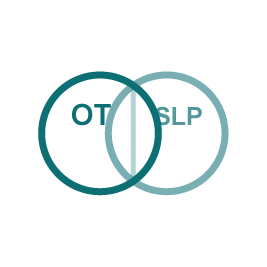
Many children benefit from both occupational therapy and speech-language therapy. When appropriate, our team collaborates around feeding, communication, regulation, motor planning, participation, and functional goals.
Collaboration across OT and SLP
Some children need more than weekly therapy. When appropriate, TTC can consider intensive therapy models that use a focused schedule to support meaningful gains over a defined period of time.
Options for more intensive support


Many families come to TTC when progress has been slower than expected, when a child’s needs are complex, or when previous therapy has not created the gains they hoped for.
We work with children who are just beginning their therapy journey and with children who need a deeper, more individualized model to move forward. Our goal is to identify the right approach for each child — and to be honest about what that looks like.
Bloomington-Normal, IL · Serving Central Illinois and regional patients traveling for specialty care
THE PROCESS
What to expect
Evaluation
We begin by learning about your child's strengths, challenges, history, routines, and goals. The evaluation may look at sensory processing, motor skills, self-care, handwriting, feeding participation, regulation, coordination, play, and functional independence.
Therapy plan
Your therapist will recommend a plan that may include weekly therapy, home programming, caregiver coaching, school collaboration, intensive therapy, or referral coordination.
Treatment sessions
Sessions are individualized and may include movement, play, skill-building, sensory-motor activities, feeding participation, fine motor work, functional routines, and caregiver education.
Progress review
Goals are reviewed over time so therapy can change as your child grows, improves, or develops new needs.
COMMON QUESTIONS
Frequently asked questions
How do I know if my child needs occupational therapy?
Pediatric OT may help if your child has difficulty with daily routines, sensory processing, handwriting, coordination, feeding participation, self-care, play, school tasks, or independence. If you're not sure whether OT is the right fit, we're happy to talk it through — give us a call and we can help you figure out the best starting point for your child.
Is pediatric OT only for young children?
No. TTC supports infants, children, teens, and young adults. Therapy goals change with age, but OT can support daily function, independence, participation, and recovery across childhood and adolescence.
Can OT help if my child has already tried therapy?
Yes. Many families come to TTC when progress has been slower than expected or when a child needs a deeper, more individualized therapy model to move forward.
Do you treat complex diagnoses like FND or DCD?
Yes. TTC has specialty experience in functional neurological disorder, developmental coordination disorder, dyspraxia, and complex cases that have not responded to standard care.
Start with a pediatric OT evaluation.
If your child needs support with sensory processing, handwriting, coordination, feeding participation, daily routines, or complex functional needs, we can help you identify the right starting point.